Residents’ Guide to The City Budget

If you care about potholes, safety, flooding, or housing, you care about the budget.
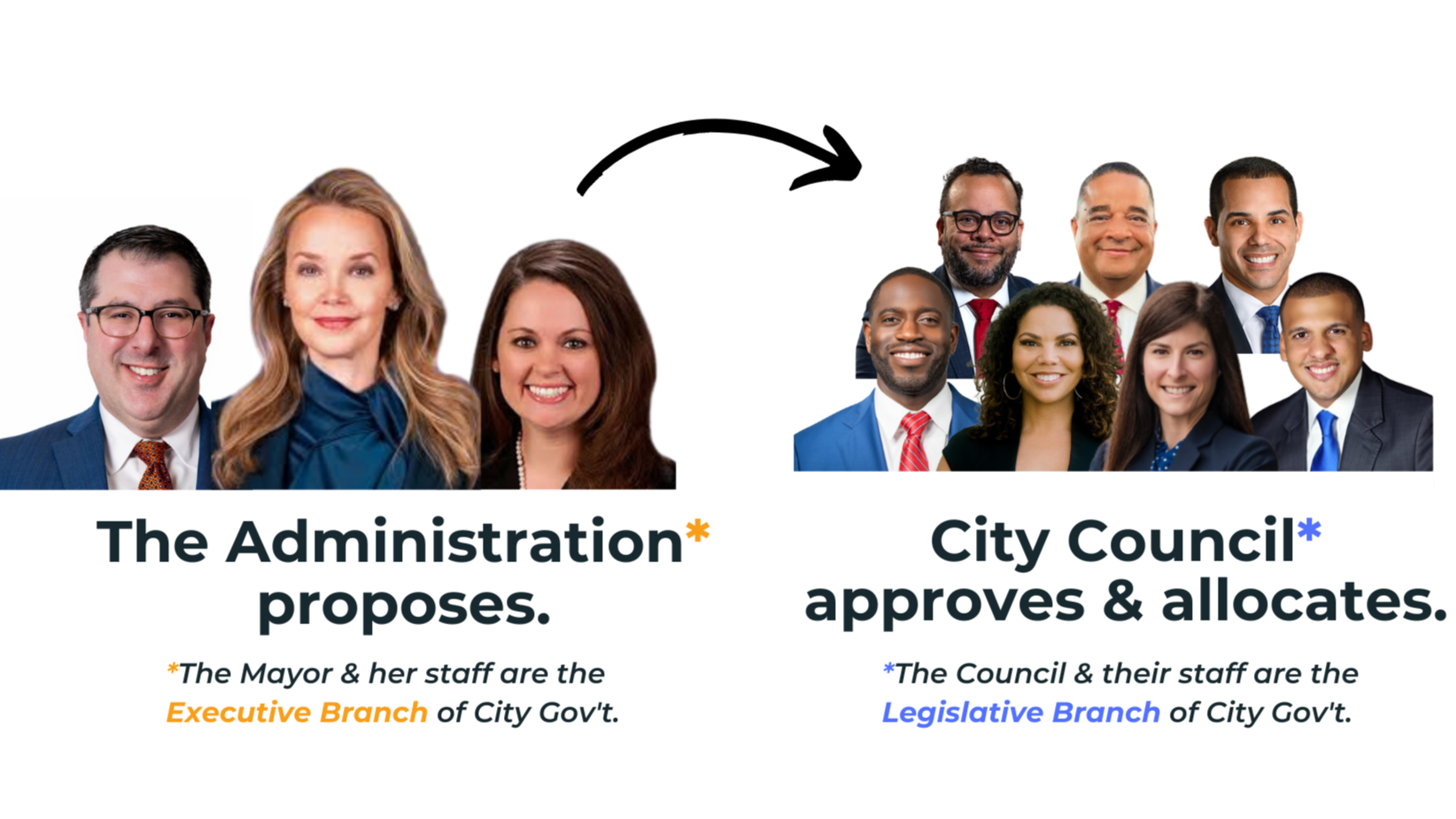
Who makes the budget?
When is the budget developed?
General Budget Timeline
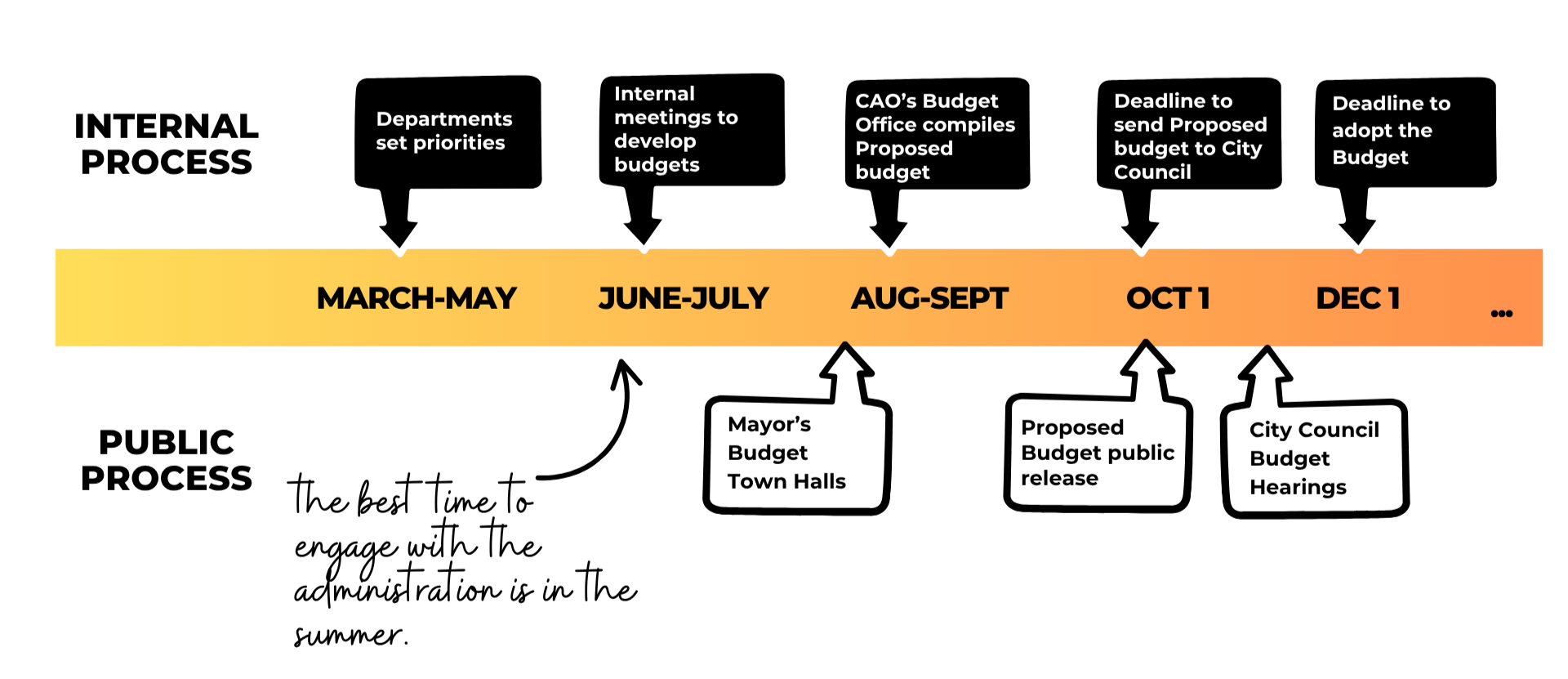
The 2027 Budget process will happen earlier!
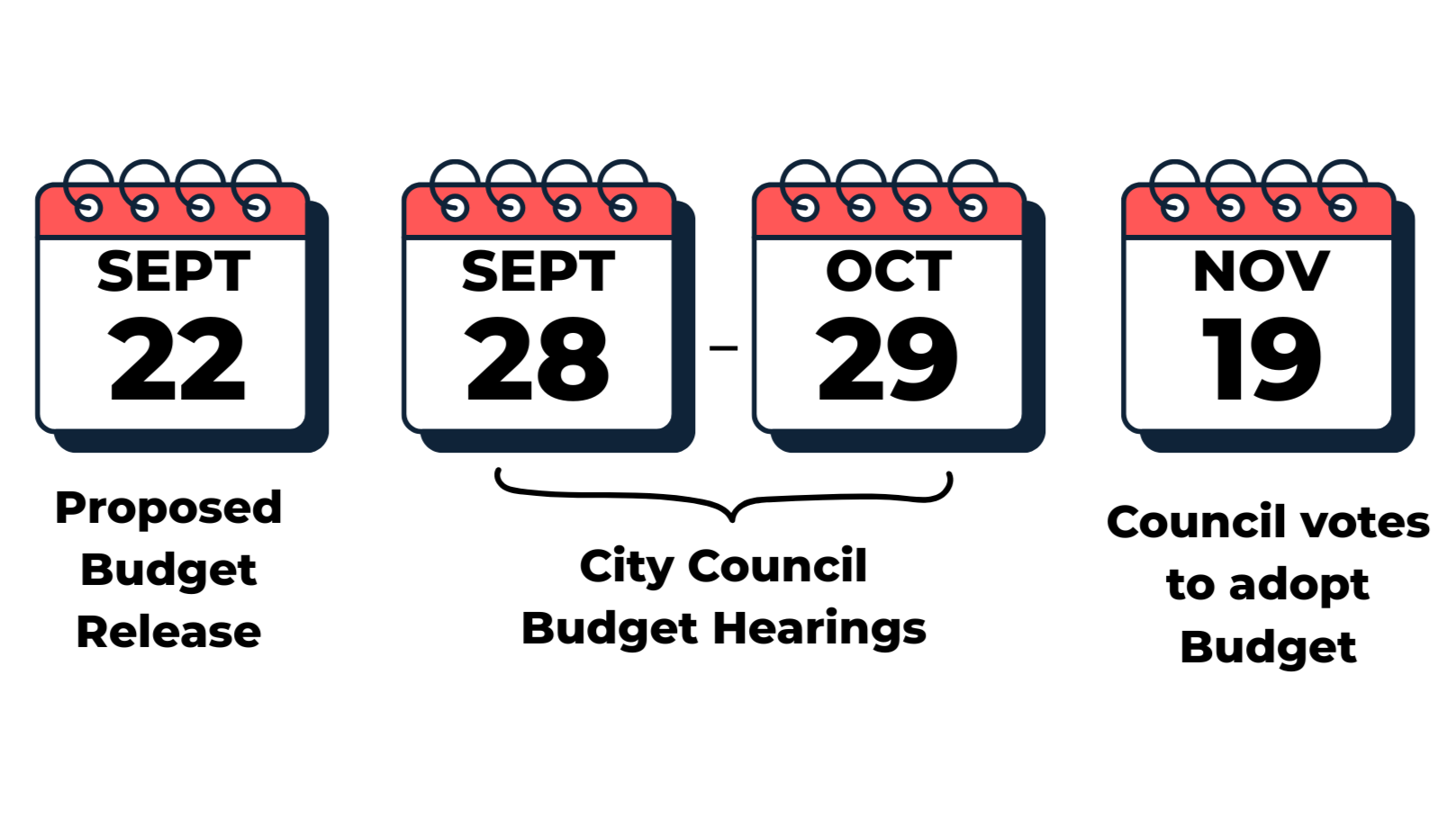
IMPORTANT DATES
The full calendar and agendas are posted at council.nola.gov/meetings
How big is the budget?
*Figures from the 2027 Proposed City of New Orleans Operating Budget Book
The City of New Orleans 2027 Proposed Operating Budget is about
$1.47 billion
That’s 7.6% smaller than the 2026 budget.
It’s sorted into two buckets:

The General Fund
$763 M
The City raises this money. More than half comes from taxes, and the rest is from fines & fees. Money in this fund is discretionary, meaning the city can mostly use it how they want.
“Non-General” Funds

$708 M
This money is from other sources, like the State and Federal Government, millages, and grants. Money in this fund is restricted to a very specific use, like building affordable housing or public libraries.
REVENUES
where does the money come from?
Here’s a breakdown of revenues from the City’s 2027 Proposed Budget.
(click to zoom!)
EXPENSES
Where does the money go?
2027 Proposed Budget Expenses
Click the headings to expand the categories.
What’s NOT in the City’s Budget
New Orleans has a lot of public agencies, and this decentralized model makes it difficult to get a clear picture of the budget for public services. Some of the key public services residents rely on are not part of the City’s Budget.
Schools - School budgets are managed by the School Board and supplemented by individual charter management orgs. The NOLA Public Schools Fiscal Year 2026 Budget is about $771 Million.
Transit - Transit budget is managed by the Regional Transit Authority (RTA). While they can receive funds from the City, most of their $225M operating budget comes from other sources.
Drainage - Drainage is mostly a function of S&WB, whose 2026 Operating Budget is $434 Million.
A look at the Proposed Cuts
The City is in a budget crisis, and has proposed $100 Million in cuts in the 2027 Proposed Budget to make a balanced budget. Here’s what is on the chopping block. This is not set in stone! Call or email your councilmember and show up to the budget hearings to tell City Council what you think.
HOW TO
INFLUENCE THE BUDGET

Share your priorities
The City’s money is your money. As a resident, it’s your responsibility to tell your council member what you need! Reach out to your council member to share your priorities before the budget is passed.
Go Deeper
Where to find all the City’s budget information: